

Helping Multiple Cats Get Along
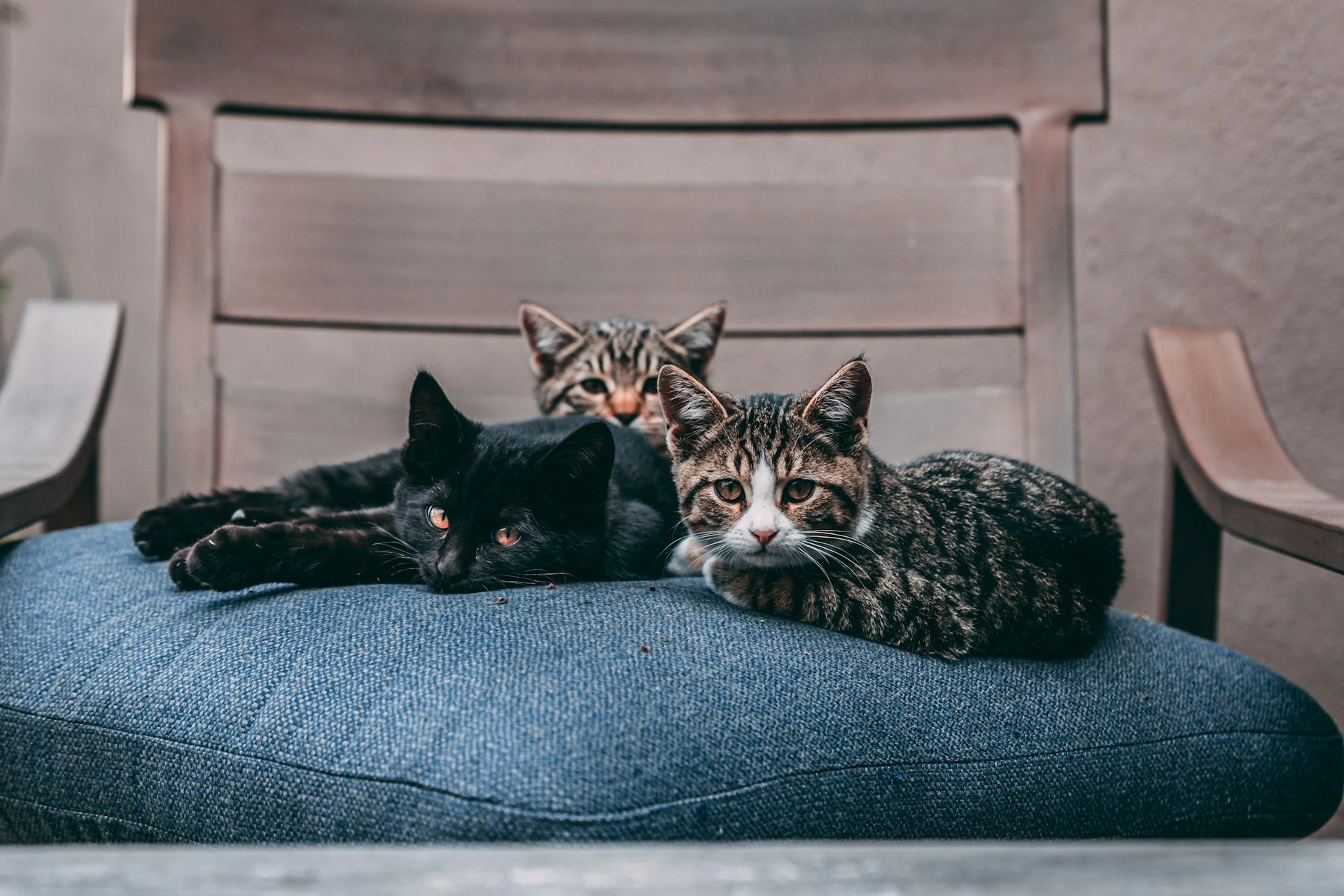
Are you considering adding a second—or perhaps third—kitty to your household? Cats are small, but they have huge purrsonalities, and can be very opinionated. While Fluffy can form very close bonds with her feline roommates, that unfortunately isn’t always the case. Cats can get quite jealous over their humans. Our feline overlords can also be pretty territorial about their homes and belongings. A local vet offers some advice on helping multiple cats get along in this article.
Introducing Two Kitties
First impressions are very, very important to our feline pals. If Fluffy and Mittens get off on the wrong paw, it’s going to be very difficult for them to get past that.
You’ll want to introduce your kitties gradually. When you bring a new cat home, put her in a separate area at first. You’ll want to provide all of the kitty necessities, such as food, water, bedding, toys, some kitty furniture, and, of course, a litterbox. This will give your furry pal a quiet place to relax and settle in.
For the first few days, visit your new buddy and get to know her a bit as she settles in. Your resident cat will probably be sniffing around the door quite a bit. This will give both kitties a chance to get used to each other’s scents, and also to come to terms with the fact that there is a new cat in town.
After a few days, your pets will—or should—have more or less accepted each other’s presence. At this point, you can let them meet. One option is bringing your new arrival into the living room in a carrier. You can also put a baby gate at the door so they can see each other.
You’ll probably see some hissing and posturing at first. That’s normal. However, your kitties really shouldn’t actually fight. If they physically attack each other, you’ll need to separate them and start over.
How Long Will It Take Cats To Get Used To Each Other?
This will vary from kitty to kitty. Cats that are used to having feline roommates will most likely adapt more quickly than a feline who has always been an only pet would.
The best-case scenario would be a few weeks. However, it may take months. In some cases, it could be as long as a year before kitties decide to accept each other.
Can Cats Become Friends After Fighting?
In many cases, kitties can get past a few squabbles, just as siblings do. However, if your pets are constantly fighting, that may be a different story.
If your feline pals fight, separate them and reintroduce them slowly. You’ll also want to try and sort out why they are fighting.
Here are a few possibilities:
Fear: Like most other animals, cats are hardwired with a fight-or-flight instinct. While many kitties will bolt from perceived threats, others are more inclined to attack … especially when the conflict is with another furball.
Maternal Instinct: Cats also get protective of their young, just like many other animals do. If another cat gets too close to Fluffy’s kittens, well, it probably won’t go well. (Note: we also strongly recommend getting your feline pal fixed if this hasn’t been done yet.)
Play Aggression: This is where things can get a bit confusing. Cats are hunters by nature, so things like stalking, pouncing, and even biting are instinctive—and even fun—to them. However, it may not be as fun to the victim as to the ‘hunter’.
You may also see tension from play aggression when you have one kitty that is friskier than the other. Kittens, of course, are very active. A frisky, pouncing youngster that is all about mastering the use of those claws and teeth may be a bit too much for a calm older cat.
Territorial Aggression: Fluffy can be quite possessive over her kingdom and humans. Your feline pal may not be happy to find another kitty in her domain.
How Do You Fix A Failed Cat Introduction?
What do you do if things go wrong? As mentioned above, you’d want to revisit the steps of introducing your feline pal. You’ll also want to help your furry friends form positive associations about being around one another.
There are a few ways to do that.
Dual play sessions can be helpful for a few reasons. For one thing, it will allow Fluffy and Mittens an appropriate way to burn off any angst or tension they are feeling. They’ll naturally be calmer after, just as a person would after a great workout. Plus, it won’t hurt for them to think good things happen when they’re together.
Keep in mind that kitties all have their own preferences when it comes to toys. Mittens might like laser pointers, while Fluffy may prefer catnip mice. It may take a bit of trial and error to see what works for each.
Finally, take care not to play favorites. Kitties can get quite jealous of each other! That could just make matters worse. It may be tempting to shower affection on a new pet, but if your resident feline feels left out, this may just feed conflict.
What Do Cats Fight Over?
It’s not uncommon for cats to battle over resources. That could be anything from the cat tower to the catnip mouse to the water bowl or litterbox. Make sure that your feline pals have plenty of everything to go around. Fluffy and Mittens shouldn’t have to fight over food, fresh water, lap space, sunbeams, litterbox room, or, well, anything.
We would strongly recommend having separate litter boxes. Cats don’t care to share a bathroom! As a rule of thumb, you would want one box per kitty, plus at least one extra.
This applies to cat towers and other pieces of furniture as well. If you have a tower, make sure that it can fit all of your feline pals at once. (Here’s an interesting note: if you find your pets on the tower at the same time, the kitty on top is usually going to be the boss cat.)
How Do I Stop My Cats From Fighting?
As mentioned above, play sessions can go a long way, both in helping kitties burn off energy and helping them bond. However, there are other things you can try as well.
- Pheromones may help. Ask your vet for specific advice on these.
- Make sure your pets have been fixed. This will not only help prevent unwanted litters, it can also go a long way toward improving behavior. Once those hormonal urges have been eradicated, pets are not only much calmer, but don’t have the drive to go looking for love. They’re also going to be much less prone to aggression.
- Help your pets form positive impressions of each other. Giving your kitties catnip, treats, and attention together can help.
- Give it time! Cats can take a while to bond.
If your kitties do fight, don’t punish them. That will only add to the list of kitty grievances, as they may associate the other cat with your actions. Ask your vet or a professional behaviorist for advice.
Make An Appointment At Our Pet Clinic
Does your feline pal need to come in for an exam, parasite control, or vaccinations? Do you need to get your kitty microchipped or fixed? Please feel free to contact us at any time. As your pet clinic, we are here for you.